Wheel Alignment
Straight tracking, a centered wheel, and tires that wear evenly.
Alignment is the adjustment of your wheels’ angles (camber, caster, and toe) so they point where they should relative to each other and the road. When those angles drift, the car may pull, the steering wheel sits crooked, and tires wear out early on one edge.
- Checking tire pressure and condition
- Inspecting steering and suspension parts for play
- Measuring camber
- Adjusting angles to manufacturer specifications where adjustable
Common symptoms
- The car pulls or drifts to one side on a straight road
- The steering wheel is off-center when driving straight
- Tires wearing on the inside or outside edge
- Steering feels loose or wanders
- You recently hit a pothole or curb
Hitting a deep pothole or sliding into a curb on an icy morning is often enough to knock alignment out. Replacing tie rods, struts, or control arms also changes the angles and typically calls for an alignment afterward.
Before aligning, we check for worn steering and suspension parts, since loose components make an alignment impossible to hold. If we find any, we will explain them and quote the repair separately so you can decide.
Every appointment is confirmed with a $100 booking/diagnostic payment (not credited toward the service). The work itself is quoted and done only after you approve an itemized estimate.
Repair labor is $100 per hour for every kind of repair — engine, transmission, electrical, heating and air conditioning, suspension, brakes and everything else. No higher specialty rate and no minimum labor charge. Labor hours are estimated for your specific vehicle and repair and shown on your written estimate before any work starts; we don’t sell flat-rate job prices.
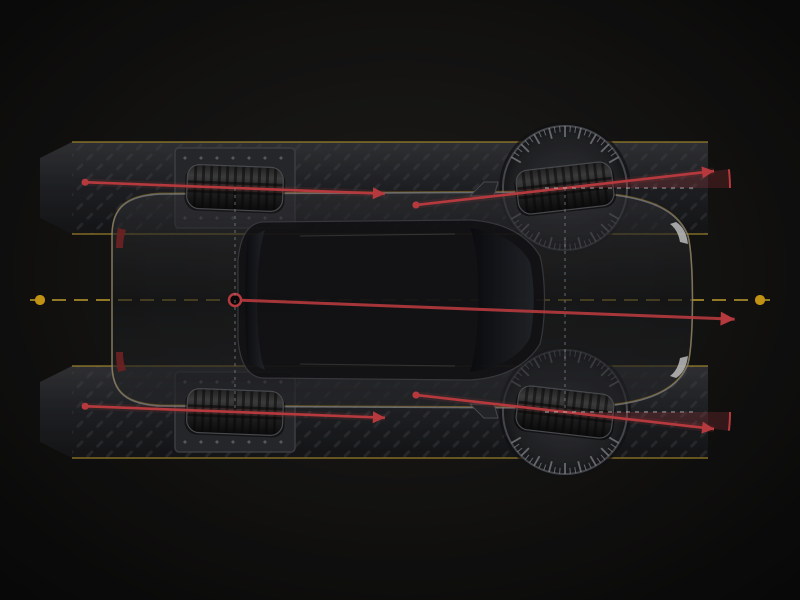
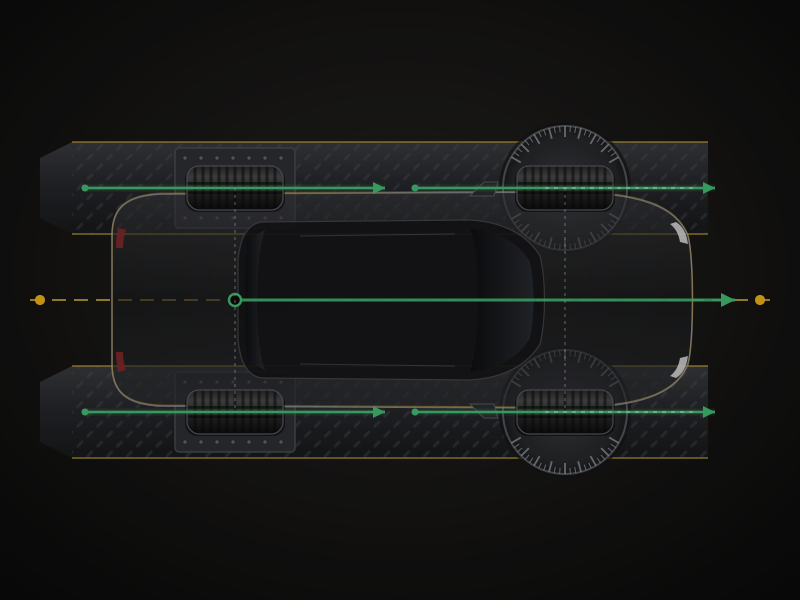
Wheel alignment angles
Front wheels out of alignment compared with all four wheels set to specification.
Signs you may need this
- The car pulls or drifts to one side on a straight road
- The steering wheel is off-center when driving straight
- Tires wearing on the inside or outside edge
- Steering feels loose or wanders
- You recently hit a pothole or curb
- You just had new tires or steering and suspension parts installed
What the service may involve
- Checking tire pressure and condition
- Inspecting steering and suspension parts for play
- Measuring camber, caster, and toe
- Adjusting angles to manufacturer specifications where adjustable
- Centering the steering wheel
- Road-testing to confirm straight tracking
Information to have ready
- Year, make, model, and mileage
- Whether the car pulls left or right
- Any recent impacts, tire replacement, or suspension work
- Whether the vehicle is lifted, lowered, or modified
Questions
How do I know if I need an alignment?
Pulling, an off-center steering wheel, or uneven tire wear are the classic signs. An alignment is also a good idea after new tires or front-end parts.
Will an alignment fix my vibration?
Usually not. Vibration at speed is more often a tire balance or tire problem. Alignment addresses pulling and uneven wear.
Can a pull be caused by something other than alignment?
Yes. Uneven tire pressure, a tire with an internal defect, or a dragging brake caliper can all cause a pull. We check these before adjusting.