Suspension Repair
Shocks, struts, control arms, and links checked for the clunks and bounces you feel.
Your suspension keeps the tires pressed to the road and the body steady over bumps. When shocks, struts, bushings, or ball joints wear out, you lose more than comfort: braking distances can grow, the car can wander in crosswinds, and tires wear unevenly.
- Inspecting shocks and struts for leaks and worn mounts
- Checking ball joints
- Looking for broken or sagging coil springs
- Road-testing to confirm noises and handling issues
Common symptoms
- Clunking or knocking over bumps
- Excessive bouncing after a dip or bump
- The front end dives hard when braking
- The vehicle leans or sways in turns
- One corner sits lower than the others
Pothole season is rough on suspension parts. A single hard hit can bend a control arm, break a coil spring, or tear a sway bar link, and corrosion from winter roads speeds up wear on springs and mounts.
We lift the vehicle, check each joint and bushing for play, look for leaking shocks or struts, and road-test to match what we find to what you feel. You get a clear list of what is worn and what is optional, with a quote before any repair.
Every appointment is confirmed with a $100 booking/diagnostic payment (not credited toward repairs). If the cause isn’t known yet, the visit is used to diagnose it; the repair is quoted for your approval.
Repair labor is $100 per hour for every kind of repair — engine, transmission, electrical, heating and air conditioning, suspension, brakes and everything else. No higher specialty rate and no minimum labor charge. Labor hours are estimated for your specific vehicle and repair and shown on your written estimate before any work starts; we don’t sell flat-rate job prices.
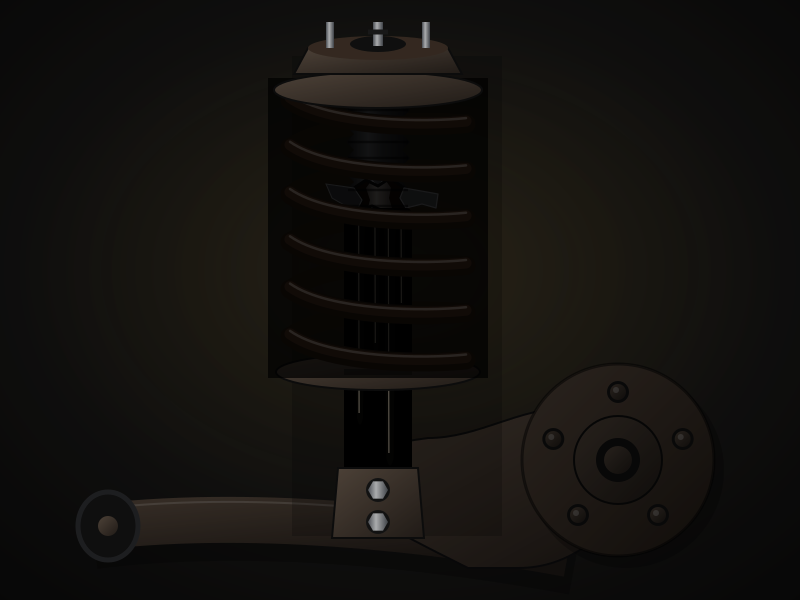
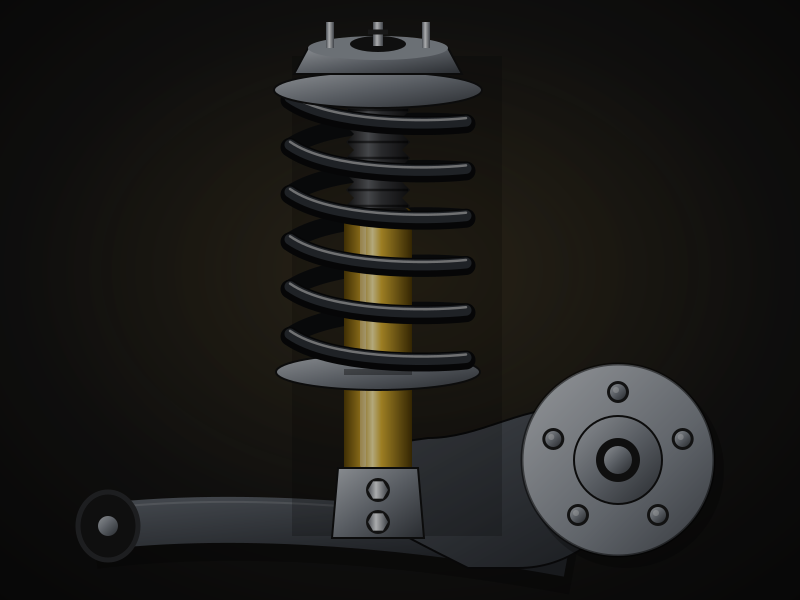
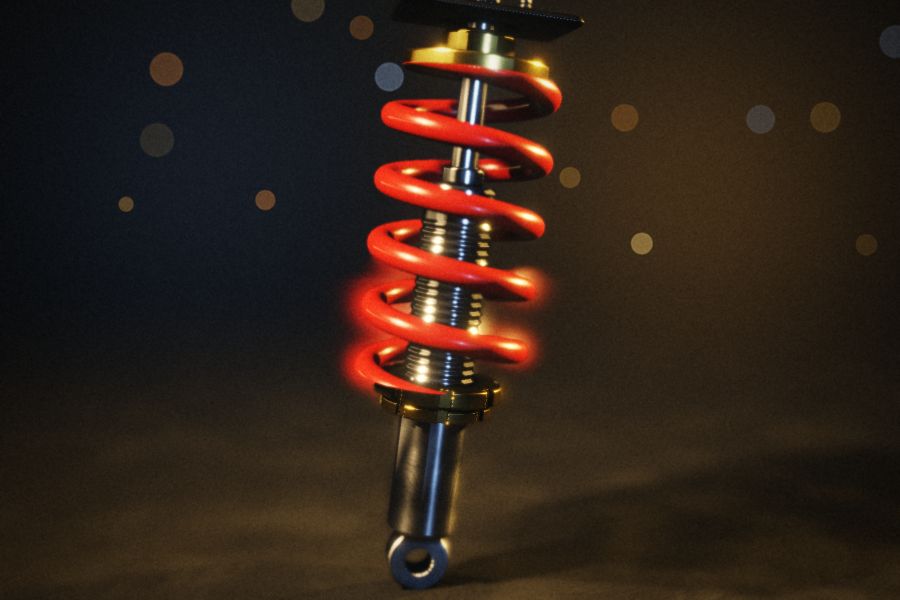
Strut assembly
A leaking strut with a torn dust boot, compared with a new strut assembly.
Signs you may need this
- Clunking or knocking over bumps
- Excessive bouncing after a dip or bump
- The front end dives hard when braking
- The vehicle leans or sways in turns
- One corner sits lower than the others
- Uneven or cupped tire wear
What the service may involve
- Inspecting shocks and struts for leaks and worn mounts
- Checking ball joints, control arm bushings, and sway bar links for play
- Looking for broken or sagging coil springs
- Road-testing to confirm noises and handling issues
- Replacing worn components if you approve
- Recommending an alignment after parts that affect geometry
Information to have ready
- Year, make, model, and mileage
- Where the noise seems to come from (front, rear, left, right)
- When it happens: bumps, turns, braking, or low speeds
- Any recent pothole hits, curb strikes, or accidents
Questions
Do you charge to find a suspension noise?
Many suspension problems are found during a standard inspection and simply quoted. If a noise or handling problem requires deeper diagnosis, diagnostic services involve a $100 diagnostic fee, which is not credited toward the cost of subsequent repairs. We will let you know before that work begins.
Do I need an alignment after suspension work?
Often, yes. Replacing struts, tie rods, or control arms usually changes alignment angles. We will tell you when an alignment is recommended.
Should shocks or struts be replaced in pairs?
Generally, yes. Replacing both sides on the same axle keeps handling balanced. We explain the reasoning for your specific vehicle.